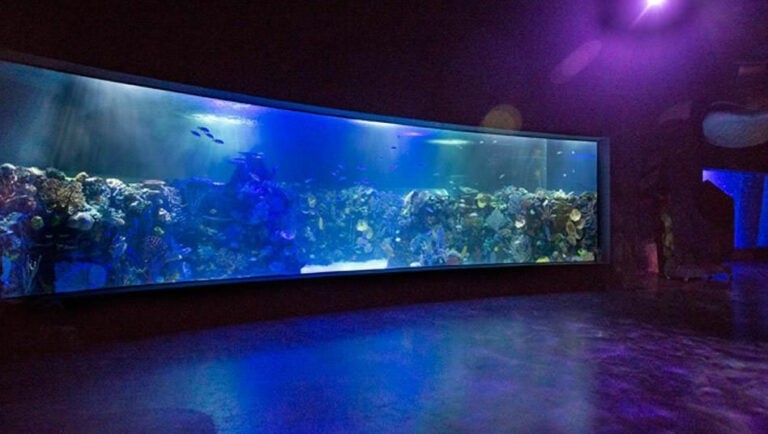
Engineering the World’s Most Immersive Aquatic Experiences
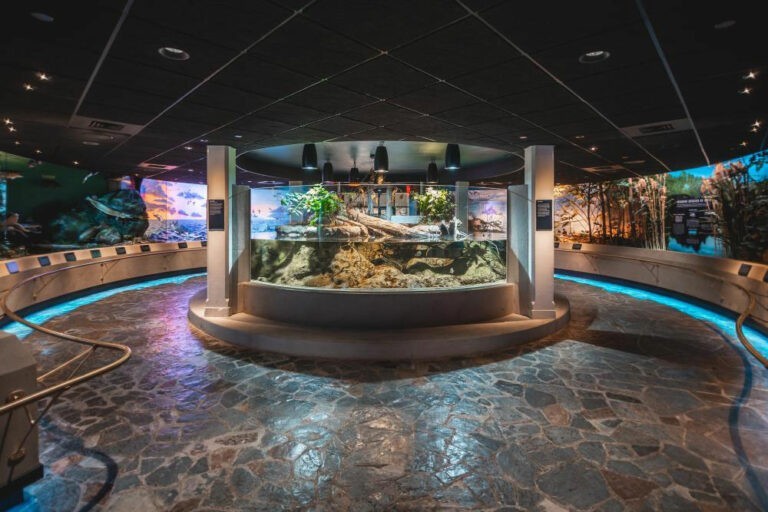
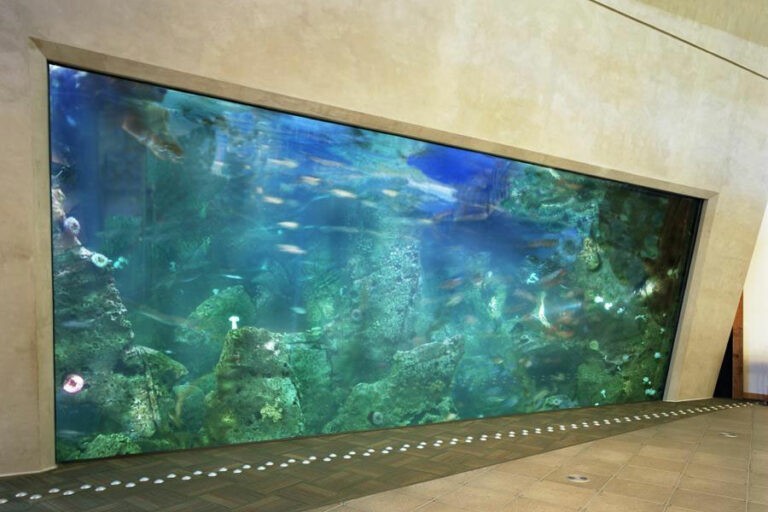
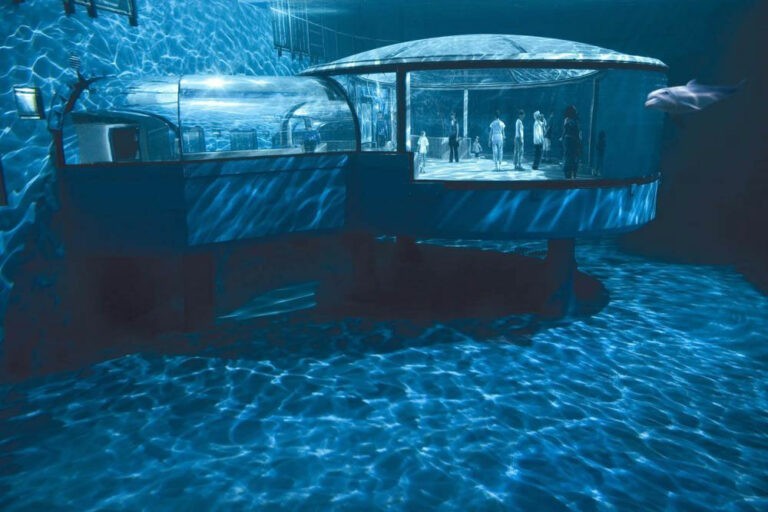
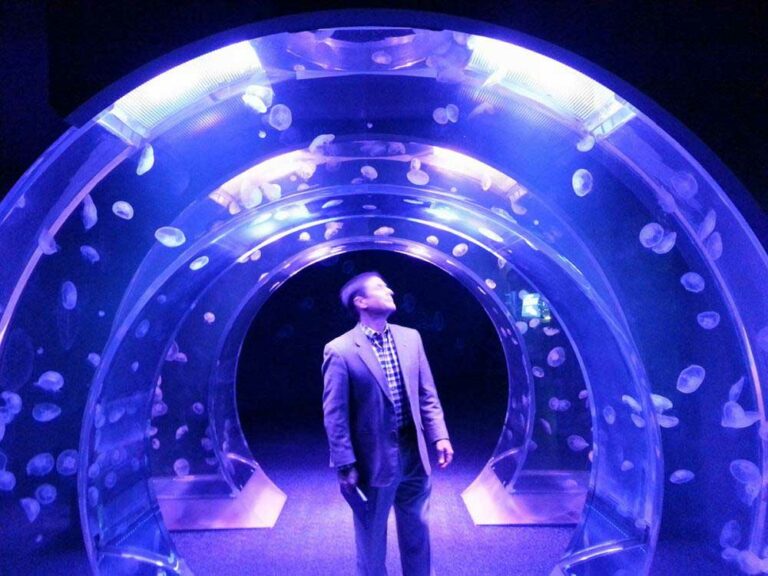
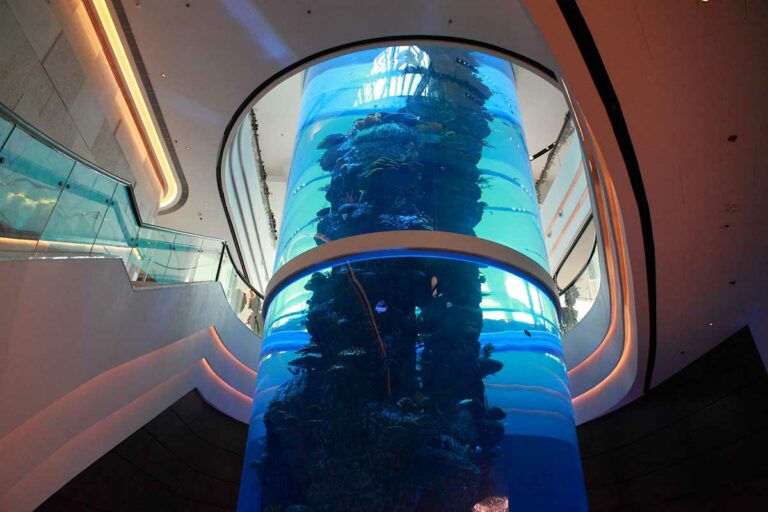
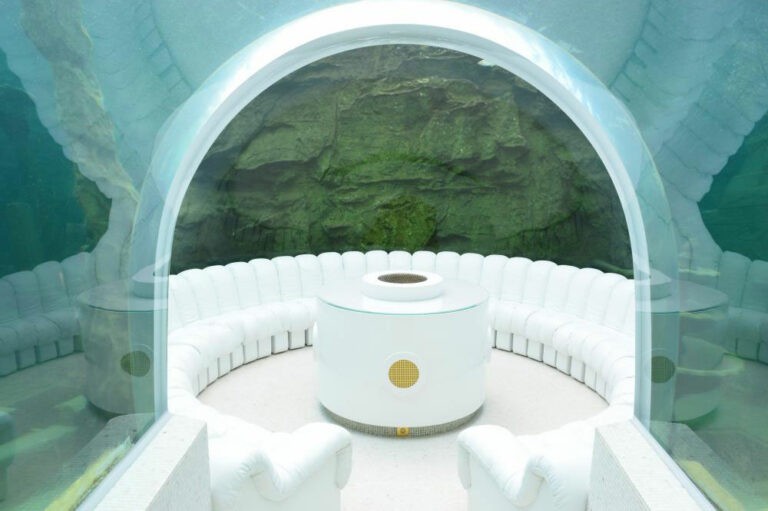
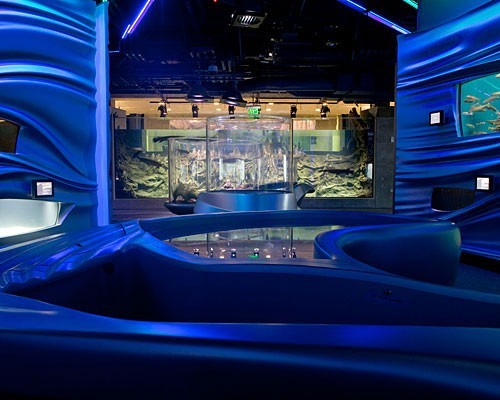
From towering viewing panels to 360° underwater tunnels, Reynolds Polymer designs and builds custom laminated and monolithic cast acrylic solutions that bring visitors face-to-face with marine life like never before.
Complete in-house design, engineering, and installation for unmatched clarity, safety, and design freedom
How Are Large Acrylic Aquariums Engineered?
Large acrylic aquariums are engineered by balancing water pressure, structural loads, panel geometry, acrylic thickness, optical clarity, and installation requirements. Each viewing panel must safely retain water while providing a clear, immersive experience.
Water Pressure and Structural Loads
Water pressure increases with depth, placing greater force on the lower portion of an aquarium panel. Engineers evaluate water depth, panel dimensions, support conditions, and expected loads. Finite Element Analysis (FEA) and panel load calculations can help determine how the acrylic will perform under pressure.
How Thick Does Acrylic Need to Be for a Large Aquarium?
There is no single required thickness. Acrylic thickness depends on water depth, panel size, shape, support configuration, and structural loads. Larger and deeper exhibits generally require thicker material. Reynolds Polymer can produce monolithic cell-cast acrylic up to 36 inches thick for demanding applications.
Flat vs. Curved Acrylic Panels
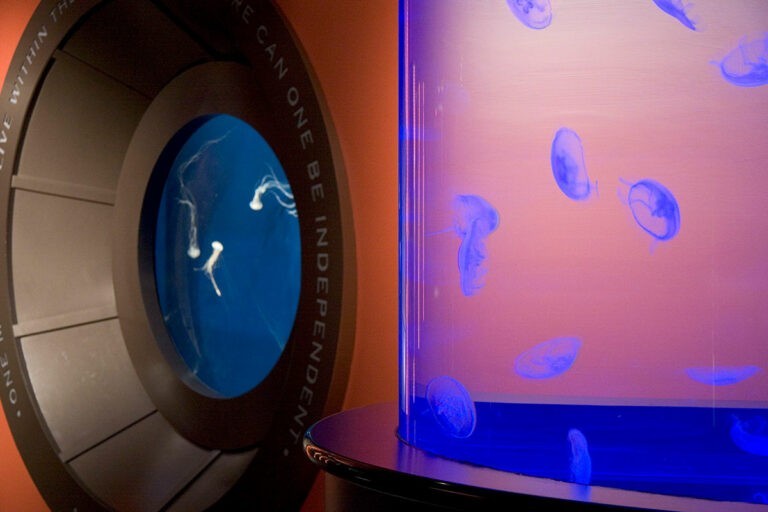
Flat panels are ideal for expansive viewing windows, while curved acrylic can create tunnels, cylinders, domes, and other immersive designs. Thermoforming allows acrylic to be shaped into complex geometries.
Inspection and Testing
Quality control may include dimensional measurements, optical inspections, seam evaluations, structural checks, and deflection testing to verify safety, performance, and visual quality.
We use cookies on our website to give you the most relevant experience by remembering your preferences and repeat visits. By clicking “Accept”, you consent to the use of ALL the cookies.
This website uses cookies to improve your experience while you navigate through the website. Out of these, the cookies that are categorized as necessary are stored on your browser as they are essential for the working of basic functionalities of the website. We also use third-party cookies that help us analyze and understand how you use this website. These cookies will be stored in your browser only with your consent. You also have the option to opt-out of these cookies. But opting out of some of these cookies may affect your browsing experience.
Necessary cookies are absolutely essential for the website to function properly. These cookies ensure basic functionalities and security features of the website, anonymously.
Cookie
Duration
Description
cookielawinfo-checbox-analytics
11 months
This cookie is set by GDPR Cookie Consent plugin. The cookie is used to store the user consent for the cookies in the category "Analytics".
cookielawinfo-checbox-functional
11 months
The cookie is set by GDPR cookie consent to record the user consent for the cookies in the category "Functional".
cookielawinfo-checbox-others
11 months
This cookie is set by GDPR Cookie Consent plugin. The cookie is used to store the user consent for the cookies in the category "Other.
cookielawinfo-checkbox-necessary
11 months
This cookie is set by GDPR Cookie Consent plugin. The cookies is used to store the user consent for the cookies in the category "Necessary".
cookielawinfo-checkbox-performance
11 months
This cookie is set by GDPR Cookie Consent plugin. The cookie is used to store the user consent for the cookies in the category "Performance".
viewed_cookie_policy
11 months
The cookie is set by the GDPR Cookie Consent plugin and is used to store whether or not user has consented to the use of cookies. It does not store any personal data.
Functional cookies help to perform certain functionalities like sharing the content of the website on social media platforms, collect feedbacks, and other third-party features.
Performance cookies are used to understand and analyze the key performance indexes of the website which helps in delivering a better user experience for the visitors.
Analytical cookies are used to understand how visitors interact with the website. These cookies help provide information on metrics the number of visitors, bounce rate, traffic source, etc.
Advertisement cookies are used to provide visitors with relevant ads and marketing campaigns. These cookies track visitors across websites and collect information to provide customized ads.